
The agri-food industry faces the constant challenge of ensuring the safety and quality of its products. Spectroscopic techniques are emerging as essential tools in this area, allowing detailed analyses without damaging samples. From UV-Visible spectroscopy to nuclear magnetic resonance, these technologies offer accurate and fast quality control, ensuring the freshness and authenticity of food. Discover how these innovative techniques are transforming the industry and meeting global market demands.

Catégorie : Sin categoría
Ultraviolet Light: An essential tool for Disinfection and Sterilization
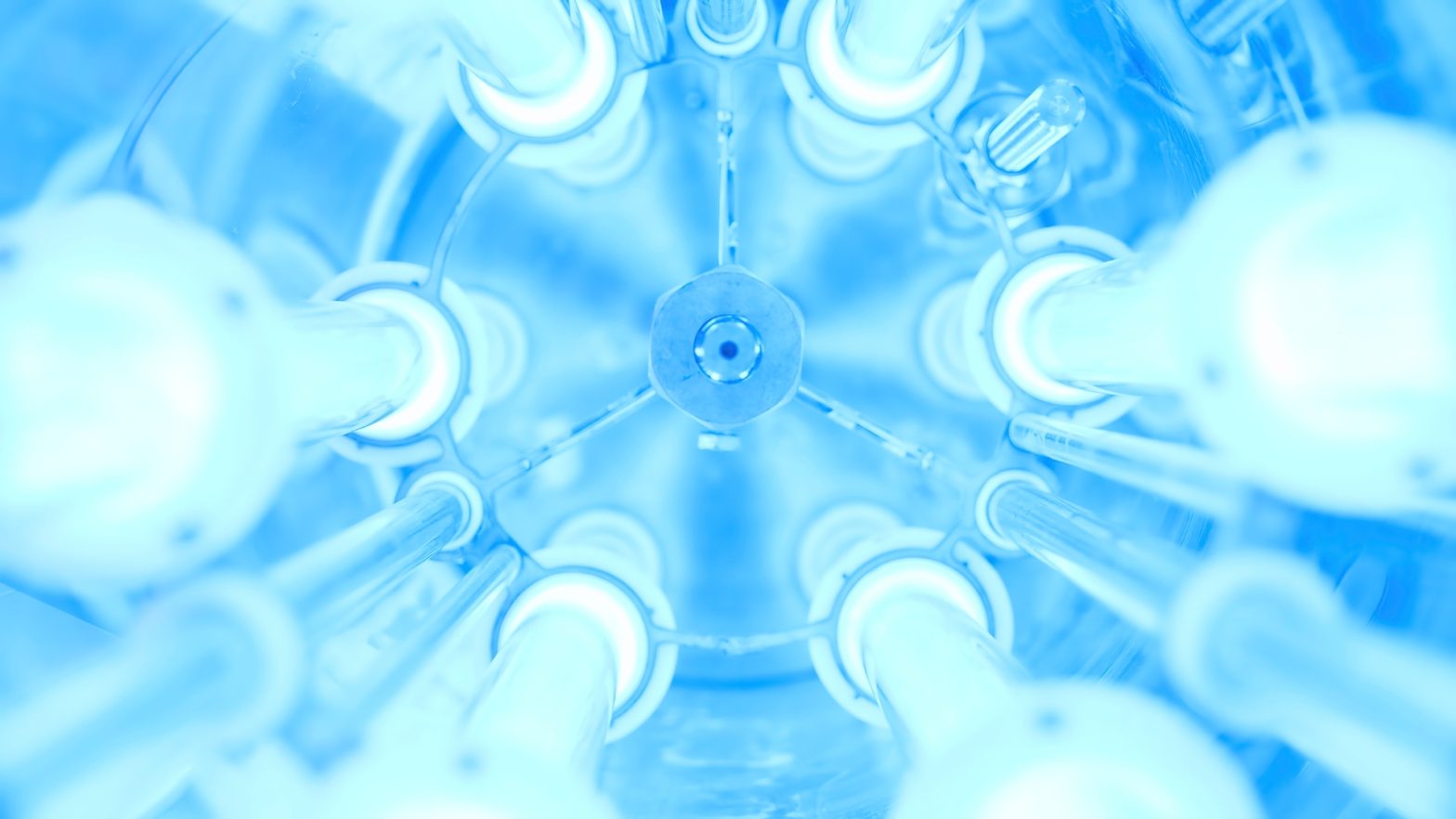
Find out how UV light has become an essential tool for disinfection and sterilization. Explore its various applications in food safety, public health, and more
The Light of Neuroscience: Unraveling the Power of Optogenetics

Optogenetics revolutionizes neuroscience by precisely controlling neuronal activity through light-sensitive opsins. Channelrhodopsins (ChRs) stimulate neurons with blue light, while halorodopsins and archaerodopsins inhibit them with longer wavelengths. Laser and LED light sources, along with fiber optics, enable targeted illumination with minimal tissue damage. This technique offers insights into behaviors, emotions, and cognitive processes, paving the way for innovative therapies for neurological disorders. Fiber optics, customizable in length and diameter, seamlessly integrate with optogenetic techniques, expanding research possibilities. The synergy between opsins, light sources, and fiber optics presents unique opportunities for advancing neuroscience.
Fluorescence Spectroscopy: Tips & Tricks

Explore essential tips and tricks for effective fluorescence spectroscopy, from understanding its fundamentals to choosing the right light source and cuvettes, and managing phenomena like quenching and autofluorescence. Discover how fluorescence spectroscopy plays a crucial role in various scientific disciplines
Illuminating the Infinitesimal: Celebrating the 2023 Nobel Prize in Physics and the important role of light pulses across different scientific disciplines

The article delves into the transformative impact of ultrafast light pulses, tracing their evolution from continuous wave lasers to attosecond precision. Recognizing the groundbreaking work honored by the 2023 Nobel Prize in Physics, it explores versatile applications across scientific domains, offering insights into quantum dynamics, materials science, and quantum electronics. The narrative anticipates a future shaped by these innovations, promising technological advancements that were once confined to the realm of science fiction.
Data Augmentation towards Optical Spectroscopy data collection streamlining in the agrifood field

Discover the transformative impact of Data Augmentation in Optical Spectroscopy for agrifood analysis. Learn how it enhances model accuracy, overcomes data scarcity, improves generalization, and reduces overfitting. Explore various augmentation methods, from noise injection to synthetic data generation, as detailed in a comprehensive overview published in Sensors MDPI. Uncover the key role Data Augmentation plays in streamlining data collection for robust and accurate analytical results in agrifood technology.
Drugs You Can Switch On and Off With Light: Sci-Fi or Reality?

Photopharmacology, a cutting-edge field, leverages light-sensitive drugs to precisely control activation, offering targeted treatment with minimal side effects. Engineered molecules change shape when exposed to specific light wavelengths, allowing drugs to shift between active and inactive states. Applications range from neurology to oncology and ophthalmology. Challenges include limited light penetration in tissues and complex molecule design, requiring interdisciplinary collaboration. However, with ongoing advancements in technology, photopharmacology is poised to gain clinical acceptance in the near future, revolutionizing healthcare.
A Symphony of Colors: Exploring Flame Colors, Spectroscopy, and the Magic of Fireworks

Discover the science behind fireworks captivating colors with flame emission spectroscopy.This analytical technique, rooted in laboratory principles, elevates firework displays by creating vibrant hues through metal compounds. Fireworks are a testament to the harmony of chemistry, physics and artistry.
Optical Spectroscopy for Fat Content Determination in Tomato Sauce

Our last research work presented at OPTOEL 2023 presented optical spectroscopy as a suitable analytical tool for fat content determination in tomato sauce. Fat content is very important in tomato sauce because it is a key pa-rameter in order to establish the quality of the final product. This work shows a simple and fast method to classify real tomato sauce samples coming from the food factory production line as a function of the fat content.
A blue LED in a blue world

Nowadays, blue LEDs are taken for granted and it is easy to find them in the market. However, it took several decades and the effort of different engineers and researchers to develop an efficient blue LED. In fact, the inventors of the blue LED (Isamu Akasaki, Hiroshi Amano, and Shuji Nakamura) earned the Nobel Prize in Physics in 2014 thanks to their creation. In this post, we explain why it took so long to manufacture a blue LED, the technical challenges that had to be faced, and why the inventors were awarded a Nobel Prize.